
Have you ever stood in a place so steeped in history, so breathtakingly beautiful, that it feels like time itself has paused? For many, the Alhambra in Granada, Spain, is precisely that kind of destination. It’s not just a collection of buildings; it’s a living testament to centuries of Moorish ingenuity, artistry, and power. As a UNESCO World Heritage site, it truly represents the enduring majesty of a civilization that left an indelible mark on Southern Spain. But what exactly makes this fortress-palace-garden complex so utterly captivating, even today?
We’re going to embark on a journey through the Alhambra, unraveling its intricate history, marveling at its architectural wonders, and understanding the profound Moorish influence that continues to resonate. You’ll gain a richer understanding, not just for a potential visit, but for appreciating the sheer scale of human achievement. It’s an experience that really sticks with you, trust me.
The Heart of Moorish Spain: A Glimpse into the Alhambra’s Rich Past
To truly appreciate the Alhambra, we first need to understand its origins. This isn’t just some old castle; it was the last bastion of Moorish rule in Western Europe. Its story begins in the 9th century as a modest fortress, but it was under the Nasrid dynasty, starting in the 13th century, that it truly blossomed. For over 250 years, the Nasrid sultans transformed this strategic hilltop into a self-contained city, a palatial complex, and a military stronghold all rolled into one. Can you imagine the power and vision required to create such a place?
Here’s the thing: the Alhambra wasn’t just a royal residence; it was the nerve center of a sophisticated kingdom, a hub of culture, science, and art during a period when much of Europe was still emerging from the Dark Ages. It served as a court, a barracks, a medina (city), and, of course, a royal palace. This multifaceted role is why its design is so incredibly complex and interconnected. It’s a physical representation of an entire civilization’s zenith.
Architectural Grandeur: Unveiling the Nasrid Palaces
Now, let’s talk about the real showstopper: the Nasrid Palaces. This is where the Alhambra’s Moorish architecture truly shines, showcasing an unparalleled blend of delicate artistry and sophisticated design. You might wonder how such intricate details could survive centuries of conflict and change, but they have, and they are simply breathtaking.
The Mexuar: Where Justice and Administration Met
Our journey often begins in the Mexuar, the public reception and administrative area. This space, though altered over time, still offers glimpses of the original decorative plasterwork and tile dadoes (the lower part of a wall). It was here that the Sultan would hold audiences and administer justice. It really gives you a sense of the daily life and governance within the complex.
The Comares Palace: A Symbol of Power and Reflection
Moving deeper, you enter the Comares Palace, centered around the stunning Court of the Myrtles. Imagine a long, reflective pool flanked by myrtle hedges, perfectly mirroring the towering Comares Tower. This tower houses the Hall of the Ambassadors, the grandest room in the palace, with its incredible wooden ceiling representing the seven heavens of Islam. The craftsmanship, the geometry—it’s just astounding, honestly.
The Palace of the Lions: An Oasis of Intimacy
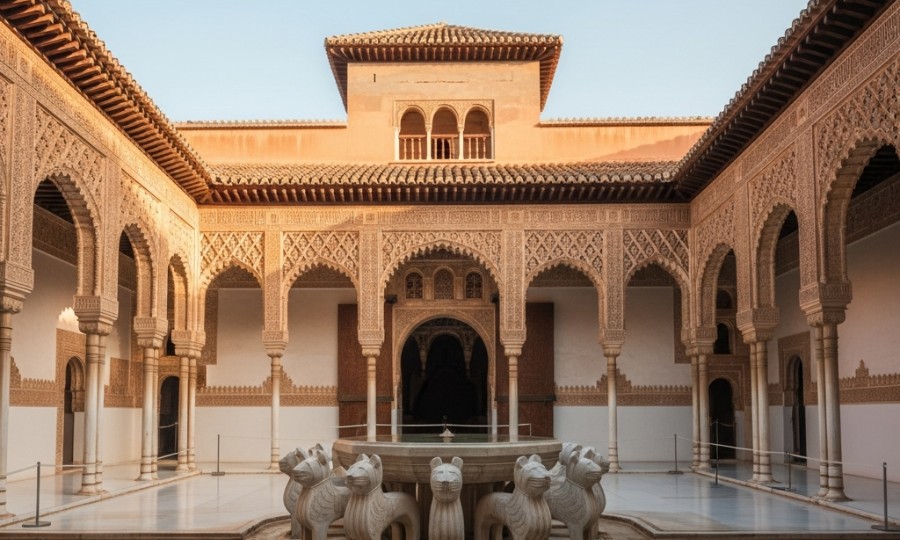
Perhaps the most famous, the Palace of the Lions, built by Sultan Muhammad V, offers a stark contrast. It’s an intimate, private space, designed for the royal family. The central Court of the Lions, with its iconic fountain supported by twelve marble lions, is surrounded by slender columns and incredibly intricate stucco work known as ‘muqarnas.’ These stalactite-like carvings aren’t just decorative; they create mesmerizing plays of light and shadow, transforming the space throughout the day. It’s a masterpiece of Islamic art, showcasing delicate balance and harmony, and you can almost feel the quiet elegance it once held.
Gardens of Paradise: Exploring the Generalife
Just a short walk from the main palaces lies the Generalife, the summer palace and country estate of the Nasrid rulers. If the palaces are about power and intricate artistry, the Generalife is about tranquility, beauty, and the profound connection between humanity and nature. It’s a place designed for relaxation and contemplation, and you’ll immediately feel a sense of calm wash over you.
The water features here are particularly noteworthy. The Acequia Courtyard, with its long pool and water jets forming graceful arches, is instantly recognizable. In Islamic tradition, water isn’t just practical; it’s symbolic of purity, life, and the rivers of Paradise. The Generalife truly embodies this, with its terraced gardens, fragrant rose bushes, and towering cypress trees creating a verdant oasis. Doesn’t it just make you want to sit and listen to the gentle flow of water for hours?
Beyond the Palaces: The Alcazaba and Its Strategic Importance
While the palatial beauty often steals the spotlight, we shouldn’t forget the Alhambra’s origins as a formidable fortress. The Alcazaba, the oldest part of the complex, stands as a testament to its military might. These battlements and towers provided crucial defense, offering panoramic views of Granada and the surrounding Sierra Nevada mountains. Climbing to the top of the Watchtower (Torre de la Vela) gives you an unparalleled perspective of the entire complex and the city below. It’s a stark reminder that even within immense beauty, there was always a need for protection.
You might be thinking, how did they manage to defend such a vast area? The strategic placement, combined with its robust construction, made the Alhambra incredibly difficult to conquer. It truly was a self-sufficient city on a hill, resilient and imposing.
Moorish Legacy: Why the Alhambra Still Captivates Today
The Alhambra isn’t just a historical relic; it’s a profound cultural touchstone. Its Moorish influence stretches far beyond its walls, impacting art, architecture, and even urban planning across Spain and beyond. The intricate geometric patterns, the use of light and shadow, the harmonious integration of water and gardens—these elements continue to inspire contemporary designers and architects. It’s a living legacy, if you will.
Plus, the Alhambra serves as a powerful reminder of a period of coexistence and intellectual flourishing, particularly in medieval Spain, where Islamic, Christian, and Jewish cultures often intertwined, leading to significant advancements in science, philosophy, and the arts. Understanding the Alhambra helps us appreciate the complexities of history and the incredible contributions of diverse cultures. It’s a story that resonates, even in our modern world.
Planning Your Visit: Making the Most of Your Alhambra Experience
Feeling inspired to see it for yourself? Excellent! Here are a few tips to make your journey to this amazing site truly rewarding:
- Book Tickets Early: This is critical. The Alhambra is one of Spain’s most popular attractions, and tickets, especially for the Nasrid Palaces, sell out weeks, if not months, in advance. Check the official Alhambra website for booking (usually the Patronato de la Alhambra y Generalife).
- Allocate Enough Time: Don’t rush it. You’ll want at least 3-4 hours to properly explore the Nasrid Palaces, the Generalife, the Alcazaba, and the surrounding areas. It’s a lot to take in!
- Wear Comfortable Shoes: You’ll be doing a lot of walking, often on uneven surfaces and up hills. Trust me, your feet will thank you.
- Go for the Morning Slot: Generally speaking, going in the morning can help you beat some of the crowds and the midday heat, especially during peak season.
- Consider a Guided Tour: While you can explore independently, a knowledgeable guide can truly bring the history and intricate details to life, offering insights you might otherwise miss.
The Alhambra isn’t just a monument; it’s an experience, a journey back in time to an era of unparalleled artistic and architectural achievement. It’s a place that asks you to slow down, to look closely, and to truly appreciate the layers of history beneath your feet. So, when will you plan your own journey to uncover its enduring majesty?
Ready to plan your trip?
AIrConxt builds daily trip plans in 2 minutes.
Calculator values are estimates. Always confirm with your airline, hotel, or credit-card provider.
