
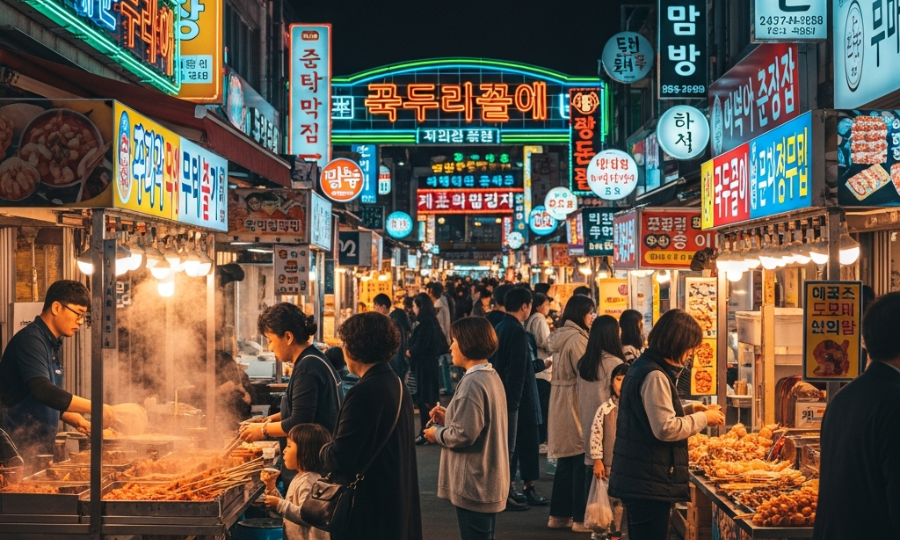
My first trip to Seoul opened my eyes to an incredible world of flavors. I remember standing in the bustling Gwangjang Market, a place you might recognize from Netflix. The aroma of sizzling pancakes and spicy stews filled the air. This market alone welcomes thousands of food lovers daily. I knew immediately I was in for an unforgettable culinary adventure.
Key Takeaways
- Over 17 million tourists visit South Korea annually, significantly drawn by its vibrant and diverse food scene.
- Gwangjang Market, featured on Netflix, offers iconic dishes like Bindaetteok and Kalguksu, with thousands of daily visitors.
- A typical Korean BBQ experience involves grilling various meats like Samgyeopsal and Galbi directly at your table, often enjoyed communally.
- Hands-on Korean cooking classes teach essential dishes like kimchi, empowering travelers to recreate authentic flavors at home.
Consequently, South Korea has become a premier destination for food enthusiasts. Over 17 million tourists visit annually, many drawn specifically by its vibrant food scene. You will discover a diverse array of culinary experiences, from sizzling Korean BBQ to savory street food. I want to share my journey and help you plan your own delicious exploration.
Exploring Seoul’s Legendary Gwangjang Market
My culinary journey truly began in Gwangjang Market. This historic market, established in 1905, offers an unparalleled sensory experience. You will find endless rows of vendors selling everything from textiles to delectable snacks. Also, it became internationally famous after appearing on Netflix’s ‘Street Food: Asia.’
I vividly remember trying Bindaetteok, a savory mung bean pancake, for the first time. A friendly vendor served it piping hot with a side of soy sauce. Each bite was crispy, flavorful, and incredibly satisfying. Many stalls specialize in this dish, using recipes passed down through generations. I recommend trying a few different vendors to compare the subtle variations. For example, some add kimchi, while others focus on a pure bean flavor.
Additionally, you must try Kalguksu, handmade knife-cut noodles. I watched a nimble chef prepare the dough and slice the noodles right before my eyes. The warm, comforting broth and chewy noodles create a perfect meal. This dish became a quick favorite during my visit. My tip for you: arrive hungry and explore the inner alleys. You will find hidden gems beyond the main thoroughfares.
Savoring the Street Food Spectacle of Myeongdong
Next, I ventured to Myeongdong, a district famous for its shopping and vibrant street food scene. As evening falls, the streets transform into a lively outdoor kitchen. You encounter countless stalls offering an exciting array of portable snacks. Plus, this area attracts millions of visitors each year, eager for quick, delicious bites.
I first tried Tteokbokki, spicy rice cakes, and instantly understood its popularity. The chewy rice cakes bathed in a fiery gochujang sauce were incredibly addictive. Many stalls offer varying spice levels, so you can choose your comfort zone. Similarly, Gyeranppang, a fluffy steamed bread with a whole egg inside, provided a delightful sweet and savory contrast. I found it surprisingly filling and perfect for a chilly evening.
Also, Myeongdong offers unique treats like grilled cheese lobster and tornado potatoes. I loved seeing the creativity of the vendors. My advice: pace yourself and share dishes with your travel companions. This strategy allows you to sample a wider variety of these delicious treats. You will experience an incredible energy walking through these bustling streets.
Mastering Korean BBQ: A Hands-On Experience
No trip to South Korea is complete without a proper Korean BBQ experience. I remember my first time, sitting at a table with a built-in grill, surrounded by platters of fresh meat and colorful banchan (side dishes). This interactive dining style is incredibly fun and social. You become part of the cooking process.
We ordered Samgyeopsal (pork belly) and Galbi (marinated short ribs). I learned to grill the meat to perfection, using the provided tongs and scissors. Then, you wrap the cooked meat in a lettuce leaf with garlic, kimchi, and a dollop of ssamjang. This combination creates a perfect bite. My personal favorite became the succulent, slightly charred pork belly. I promise, the flavors explode in your mouth.
Plus, the communal aspect of KBBQ truly enhances the meal. You share stories and laughter while cooking together. Many restaurants offer special cuts aged for optimal flavor, increasing the experience. I encourage you to try different cuts and marinades. You will quickly find your personal favorites among the delicious options. This experience will definitely become a highlight of your trip.
Beyond the Classics: Unique Culinary Adventures
While street food and BBQ are iconic, South Korea offers so much more. I discovered a fascinating world of specialty cafes and unique regional dishes. For example, Busan, a coastal city, boasts incredible seafood and its famous Dwaeji Gukbap, a hearty pork soup. I found its rich, milky broth incredibly comforting on a cool day. It provides a different kind of culinary satisfaction.
Similarly, I explored the burgeoning cafe culture in Seoul. Areas like Hongdae and Garosu-gil offer incredibly creative and beautifully designed cafes. You can find everything from traditional tea houses to modern spaces serving elaborate desserts. I spent an afternoon in a themed cafe, enjoying a perfectly brewed coffee and a delicate pastry. This offered a peaceful break from the city’s hustle. You will truly appreciate the attention to detail.
Also, don’t miss out on temple food, a unique aspect of Korean cuisine. These dishes are prepared without meat, fish, or strong seasonings like garlic and onion. I experienced a serene meal, emphasizing natural flavors and mindful eating. This offered a profound culinary and cultural insight. You can find restaurants specializing in temple food in Seoul. It presents a refreshing contrast to the bolder flavors of street food.
Bringing Korea Home: Cooking Class Secrets
My most memorable and actionable experience was taking a hands-on Korean cooking class. I wanted to recreate the amazing flavors I had tasted. You can find many reputable cooking schools in Seoul offering classes for tourists. I chose one that focused on essential home-style dishes. This proved to be an excellent decision.
First, I learned to make traditional kimchi from scratch. The instructor guided us through selecting ingredients and the fermentation process. I discovered the secrets behind its complex flavor profile. This class empowered me to bring a piece of Korea back to my own kitchen. You will enjoy the satisfaction of making your own authentic kimchi. Many classes also teach popular dishes like Bulgogi and Bibimbap.
Consequently, I gained confidence in preparing Korean meals. I now regularly make some of these dishes for my friends and family. They always rave about the authentic taste. I highly recommend booking a class early in your trip. You can then appreciate the dishes even more, understanding their preparation. It truly enhances your overall culinary understanding. You will gain skills that last a lifetime.
Planning Your Delicious Korean Food Journey
South Korea offers an incredible culinary adventure, filled with diverse flavors and unforgettable experiences. From the bustling energy of Gwangjang Market to the intimate setting of a Korean BBQ table, every meal tells a story. I hope my anecdotes inspire you to embark on your own food exploration. You will create incredible memories and discover new favorite dishes.
First, research specific dishes you want to try. Then, identify the best neighborhoods or markets for those foods. For example, Myeongdong excels in street food, while Gangnam offers upscale dining. You will benefit from a little planning. Consider booking a guided food tour to get an expert’s perspective. They often uncover hidden local spots you might miss otherwise.
Finally, embrace the adventure and be open to new tastes. You might discover a new favorite food you never expected. South Korean cuisine promises an exciting, delicious journey for every palate. I know you will love every flavorful moment.
Related Reading
Frequently Asked Questions
What are the must-try street foods in South Korea?
You must try Tteokbokki (spicy rice cakes) and Gyeranppang (egg bread) in areas like Myeongdong. Gwangjang Market offers Bindaetteok (mung bean pancakes) and Kalguksu (knife-cut noodles) as popular, savory options for millions of visitors.
How do you participate in a Korean BBQ meal?
At a Korean BBQ restaurant, you select various cuts of meat like Samgyeopsal or Galbi, which you grill at your table. You then wrap the cooked meat in lettuce with banchan and ssamjang for an authentic experience, typically sharing with companions.
Can I take a cooking class in South Korea?
Yes, many cooking schools in Seoul offer classes for tourists. I recommend booking a class to learn traditional dishes like kimchi or Bulgogi, allowing you to recreate authentic Korean flavors at home, as I did.
Where can I find traditional Korean market food?
Gwangjang Market in Seoul is a historic market, established in 1905, renowned for its traditional Korean market food. It provides a vibrant atmosphere to sample various authentic dishes and is a popular spot for both locals and tourists.
This article was drafted with AI assistance. Please verify all claims and information for accuracy. The content is for informational purposes only and does not constitute professional advice.
Ready to plan your trip?
AIrConxt builds daily trip plans in 2 minutes.
Calculator values are estimates. Always confirm with your airline, hotel, or credit-card provider.
