
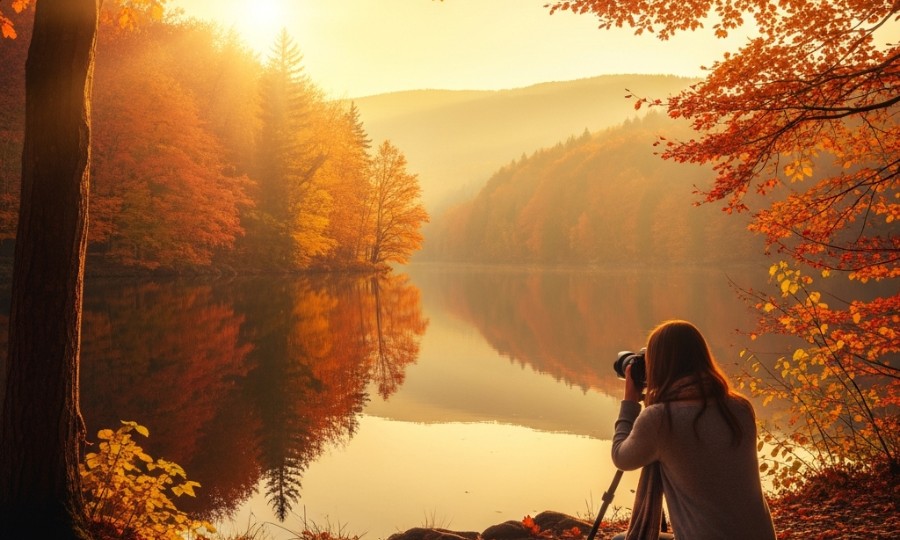
Ever scrolled through social media in autumn, admiring those breathtaking photos of fiery red maples and golden aspens, only to feel a pang of disappointment with your own attempts? You’re not alone. Capturing the true vibrancy and serene beauty of fall can be surprisingly challenging, especially when the light isn’t cooperating. But what if there was a simple secret to unlocking truly stunning autumn photography, transforming your scenic drive snapshots into gallery-worthy images? (There is!)
Here’s the thing: mastering the “golden hour” – that magical period just after sunrise or before sunset – is your ultimate cheat code for capturing fall’s grandeur. It’s not just about pointing and shooting; it’s about understanding light, composition, and knowing how to make even basic gear sing. We’re going to dive deep into these elements, ensuring your next autumn adventure yields a treasure trove of unforgettable photographs. You’ll learn how to leverage that incredible light, frame the perfect shot, and even make your smartphone capture professional-looking results. Ready to elevate your fall photography? Let’s get started.
Mastering the Golden Hour: Your Secret Weapon for Fall Photography
The golden hour isn’t just a catchy phrase; it’s a photographer’s dream. During these precious times, the sun hangs low in the sky, casting a soft, warm, diffused light that makes everything glow. This light is less harsh than midday sun, reducing shadows and enhancing the rich, saturated colors of autumn foliage. Think about it: have you ever noticed how the world just looks better during a sunrise or sunset? That’s the golden hour at work, and it’s absolutely critical for capturing autumn colors.
So, how do you make the most of it? First, timing is everything. For optimal results, aim to be out shooting within an hour or two after sunrise, or an hour or two before sunset. This means a bit of planning, especially if you’re hitting a popular scenic route like the Blue Ridge Parkway or a winding road through Vermont. You’ll want to scout your locations beforehand, if possible, to know where the best light will fall.
When the light hits your subject from the side or even slightly from behind (backlighting), it creates a beautiful rim light effect, making leaves appear to almost glow from within. This is particularly effective for individual trees or small clusters of foliage. Don’t be afraid to experiment with your position relative to the sun. Sometimes, a subtle shift in angle can completely change how the light interacts with the leaves, revealing textures and colors you might otherwise miss. You might wonder, “What if it’s cloudy?” Even on overcast days, the diffused light can be fantastic for fall colors, providing a softer, more even illumination without harsh shadows, which can be surprisingly beautiful in its own right.
Composition is Key: Framing Fall’s Grandeur
Once you’ve got that incredible golden hour light, composition becomes your next powerful tool. It’s not enough to simply point your camera at a beautiful scene; you need to frame it in a way that guides the viewer’s eye and tells a story. This is where many aspiring photographers (and even some seasoned ones!) stumble. Are you just snapping a pretty picture, or are you creating a compelling image?
Let’s talk about some fundamental compositional techniques that work wonders with autumn landscapes. The “Rule of Thirds” is your best friend here. Imagine your image divided into a 3×3 grid (most cameras and phones have this overlay option). Instead of placing your main subject – say, a vibrant red maple or a winding road – dead center, try positioning it along one of the grid lines or at their intersections. This creates a more dynamic and visually interesting photograph. For instance, if you’re capturing a road disappearing into a forest of fall colors, place the road along the bottom third and let the trees fill the upper two-thirds, or vice-versa if a striking tree is your main focus.
Leading lines are another fantastic technique. Roads, fences, rivers, or even rows of trees can act as natural leading lines, drawing the viewer’s eye deeper into your photograph and creating a sense of depth. Imagine a country lane bordered by fiery foliage, leading directly into a golden sunset – that’s a powerful leading line at work! Don’t forget about foreground interest either. Adding something compelling in the immediate foreground, like a fallen leaf, a rustic fence post, or even a patch of colorful grass, can add layers to your image and truly immerse the viewer in the scene. In my experience, even a simple, well-placed rock can make a huge difference in the overall impact of a scenic shot.
Essential Gear for Your Autumn Photo Journey (and What You Already Have)
You might be thinking, “Do I need a fancy DSLR or mirrorless camera to capture these amazing fall photos?” The truth is, while professional-grade equipment certainly offers more control and flexibility, you can achieve stunning results with what you likely already have: your smartphone. Modern smartphones, especially newer models, boast incredible camera capabilities that are more than sufficient for capturing the beauty of autumn.
If you’re using a smartphone, focus on its strengths. Use the “portrait mode” to create a beautiful bokeh effect (blurred background) for close-ups of leaves or smaller subjects. Explore third-party camera apps that give you more manual control over settings like exposure and white balance, allowing you to fine-tune your golden hour shots. And don’t underestimate the power of a simple tripod, even a small, flexible one for your phone, which can dramatically improve sharpness in low light or for longer exposures.
For those with a DSLR or mirrorless camera, consider bringing a few key lenses. A versatile zoom lens (like a 24-70mm or 24-105mm) is perfect for capturing a wide range of scenes, from sweeping landscapes to more intimate details of foliage. A polarizing filter is also incredibly useful for fall photography; it helps cut glare from wet leaves or reflections from water, making colors pop and skies appear richer. (It really does make a noticeable difference!) Generally speaking, a sturdy tripod is a non-negotiable for landscape photography, especially during golden hour when light levels are lower, ensuring crisp, detailed images. Don’t forget extra batteries – colder weather can drain them faster!
Post-Processing Perfection: Bringing Your Fall Photos to Life
You’ve captured some fantastic shots during golden hour, composed beautifully, and used the right gear. Now what? This is where post-processing comes in, and it’s not about fabricating images, but about enhancing the beauty that was already there. Think of it as developing a film negative – it’s a crucial step in bringing your vision to life.
For smartphone users, built-in editing tools or popular apps like Adobe Lightroom Mobile or Snapseed offer powerful capabilities. Focus on subtle adjustments: boost the “saturation” or “vibrance” sliders slightly to make those autumn colors sing, but be careful not to overdo it, or your photos will look unnatural. Adjust the “highlights” and “shadows” to recover detail in brighter or darker areas. A slight increase in “contrast” can add depth, and adjusting “white balance” can warm up or cool down your image to better reflect the golden hour glow you experienced.
If you’re working with a desktop program like Adobe Lightroom Classic or Photoshop, you have even more precise control. Here, you can make global adjustments and then refine specific areas using local adjustment brushes. For example, you might selectively boost the reds and oranges in the foliage without affecting other parts of the image. Don’t forget about sharpening – a subtle touch can bring out the crispness of individual leaves. The goal isn’t to create something artificial, but to faithfully represent the stunning beauty you witnessed, perhaps even enhancing it to match the feeling you had when you pressed the shutter. We know this feels overwhelming at first, but with practice, you’ll develop your own editing style.
Your Next Autumn Adventure Awaits
So, there you have it: the keys to unlocking truly remarkable autumn photography. From timing your shots during the magical golden hour to composing with intent, and from leveraging your existing gear to refining your images in post-processing, you now have a comprehensive toolkit. The beauty of fall is fleeting, and capturing its essence is a rewarding pursuit.
What are you waiting for? Grab your camera – whether it’s a professional setup or the smartphone in your pocket – plan a scenic drive, and immerse yourself in the vibrant tapestry of autumn. Experiment with these tips, don’t be afraid to try new angles, and most importantly, enjoy the process. You’ll be amazed at the stunning results you can achieve, and you’ll have beautiful memories to cherish for years to come. Happy shooting!
Ready to plan your trip?
AIrConxt builds daily trip plans in 2 minutes.
Calculator values are estimates. Always confirm with your airline, hotel, or credit-card provider.
