
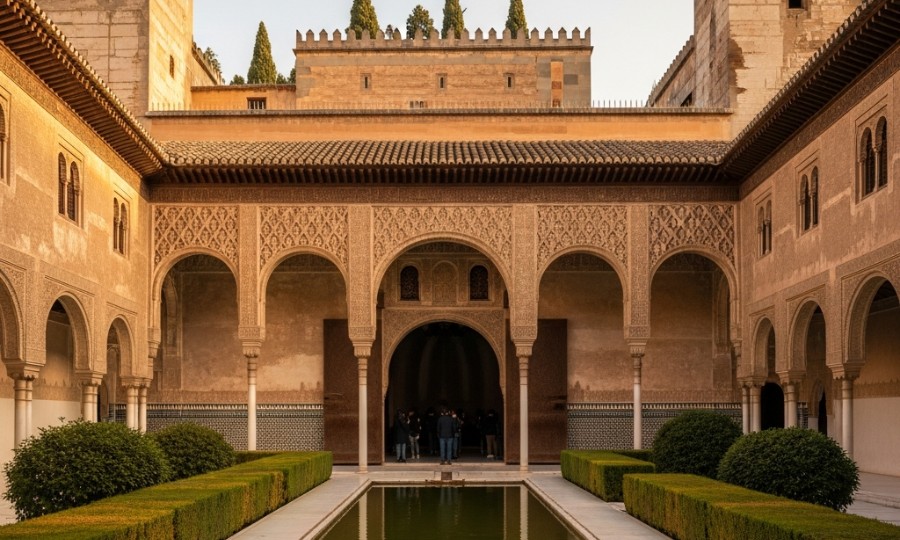
Have you ever stood somewhere that felt like history whispering in your ear, a place where every stone tells a story of empires, artistry, and enduring beauty? The Alhambra in Granada, Spain, is precisely that kind of destination. It’s not just a collection of buildings; it’s a living testament to a profound cultural legacy, a place that continues to captivate visitors from around the globe. For American readers, who often appreciate both historical depth and architectural grandeur, understanding the Alhambra means much more than simply admiring its intricate facades. It’s about grasping the immense Moorish influence that shaped it, making it a truly unparalleled UNESCO World Heritage site.
We’re going to embark on a journey through its remarkable past and breathtaking present. You’ll discover why its delicate details and thoughtful design have stood the test of time, influencing art and architecture far beyond Spain’s borders. We know that planning a trip to such an iconic site can feel a bit overwhelming, so we’ll break down what makes the Alhambra so special, focusing on the core elements that give it its enduring majesty.
Beyond the Postcards: Unpacking the Alhambra’s Moorish Roots
To truly appreciate the Alhambra, we first need to understand its origins. This isn’t just another European palace; it’s the last bastion of Moorish rule in Spain, built predominantly by the Nasrid dynasty in the 13th and 14th centuries. Think about that for a moment: an entire civilization’s artistic and scientific peak distilled into one complex. But what exactly was the Moorish influence, and why does it matter so much to the Alhambra?
The Moors, who were North African Muslims, brought with them an incredibly sophisticated culture when they arrived on the Iberian Peninsula in the 8th century. Their presence for nearly 800 years left an indelible mark on Spanish language, cuisine, science, and, crucially, architecture. At the Alhambra, this influence is evident everywhere: from the complex geometric patterns (which reflect Islamic aniconism, avoiding human or animal figures) to the Arabic calligraphy adorning almost every surface, often quoting the Quran or praising the Nasrid rulers. They were masters of light, water, and space, integrating these elements not just for aesthetic pleasure but for practical and symbolic purposes. For instance, water features, like those found throughout the Alhambra, weren’t just decorative; they symbolized paradise, purification, and served to cool the air in Granada’s hot climate.
This blending of function and beauty, often achieved through humble materials like stucco and tile, is a hallmark of Moorish design. It’s a stark contrast to the heavy stone structures often associated with European castles of the same period, isn’t it? The Alhambra, instead, feels light, airy, and exquisitely detailed, drawing you into its serene spaces.
The Nasrid Palaces: A Symphony of Islamic Artistry
If you’re looking for the heart of the Alhambra’s artistic brilliance, you’ll find it within the Nasrid Palaces. This isn’t a single building but a series of interconnected structures, each serving a distinct purpose for the ruling sultans. You might be thinking, ‘It’s just decoration,’ but trust me, it’s so much more profound. These palaces — the Mexuar, the Comares Palace, and the Palace of the Lions — showcase an evolution of architectural styles and an unparalleled dedication to craftsmanship.
Take the Comares Palace, for example, home to the stunning Courtyard of the Myrtles and the Hall of the Ambassadors. The sheer scale and intricate detail of the stucco work here are breathtaking. Every inch seems to tell a story, with geometric motifs, arabesques, and calligraphic inscriptions creating a mesmerizing visual tapestry. The Hall of the Ambassadors, with its elaborate wooden dome, is particularly impressive, representing the seven heavens of Islamic cosmology. Then there’s the iconic Palace of the Lions, centered around the famous Courtyard of the Lions. The delicate columns, the rhythmic arches, and the central fountain supported by twelve marble lions create an atmosphere of serene elegance. It’s a masterful display of how seemingly delicate structures can support substantial spaces, all while maintaining an ethereal quality. The muqarnas, or ‘honeycomb’ vaulting, found in places like the Hall of the Abencerrajes, defy gravity with their complex, stalactite-like structures, making you feel as if you’re stepping into a jewel box. It’s truly an architectural marvel that demonstrates advanced mathematical and artistic understanding.
Generalife Gardens: Where Serenity Meets Grandeur
Beyond the palatial confines lies the Generalife, the sultans’ summer palace and country estate. Its name, generally translated as ‘Architect’s Garden’ or ‘Garden of Paradise,’ is incredibly fitting. The Generalife isn’t just a garden; it’s a meticulously planned landscape designed for relaxation, reflection, and escape from the formal court life. Isn’t it fascinating how a garden can tell such a rich story?
The design here prioritizes water, light, and greenery, creating a tranquil oasis. The Patio de la Acequia (Courtyard of the Water Channel) is perhaps its most famous feature, with its long pool flanked by water jets that arc gracefully, creating a soothing soundscape and cooling effect. The careful terracing, the fragrant rose bushes, and the shade-providing cypress trees all contribute to a sensory experience that’s deeply calming. The Generalife perfectly exemplifies the Islamic garden tradition, which sought to create a terrestrial representation of paradise. It’s a testament to the idea that nature, when carefully cultivated and integrated with architecture, can elevate the human spirit. Walking through these gardens, you can almost feel the centuries of sultans and their families seeking solace and inspiration here. It’s a reminder that even the most powerful rulers needed a place to unwind and connect with beauty.
Enduring Legacy: Why the Alhambra Still Captivates Today
The Alhambra’s profound impact extends far beyond its physical beauty. Recognized as a UNESCO World Heritage site in 1984, it stands as a crucial monument to a pivotal period in world history. Its architectural innovations and artistic expressions have influenced countless artists, architects, and designers, demonstrating the enduring power of cross-cultural exchange. From the intricate tile work to the sophisticated water systems, the Alhambra’s legacy can be seen in various forms throughout Spain and beyond.
For us, experiencing the Alhambra is more than just a history lesson; it’s an encounter with human ingenuity and a reminder of how different cultures can create something truly extraordinary when they intersect. It challenges our perceptions of what a ‘palace’ or ‘fortress’ can be, blending military strength with unparalleled artistic refinement. We know that visiting historical sites can sometimes feel overwhelming with information, but the Alhambra effortlessly draws you in, making its complex history feel surprisingly accessible and engaging. Its preservation is a testament to its universal value, a place where the echoes of a vibrant past continue to resonate with everyone who walks through its gates.
So, as you consider places that truly leave an imprint, don’t overlook the Alhambra. Its enduring majesty isn’t just about its ancient stones or delicate stucco; it’s about the stories they tell, the cultures they represent, and the profound beauty they hold. Planning your visit well in advance is crucial, especially if you want to explore the Nasrid Palaces, as tickets often sell out months ahead. Consider hiring a knowledgeable local guide; their insights can truly bring the history to life, offering context and details you might otherwise miss. Don’t rush through it; allow yourself time to wander, reflect, and absorb the unique atmosphere of this incredible piece of history. You’ll be glad you did.
Ready to plan your trip?
AIrConxt builds daily trip plans in 2 minutes.
Calculator values are estimates. Always confirm with your airline, hotel, or credit-card provider.
