
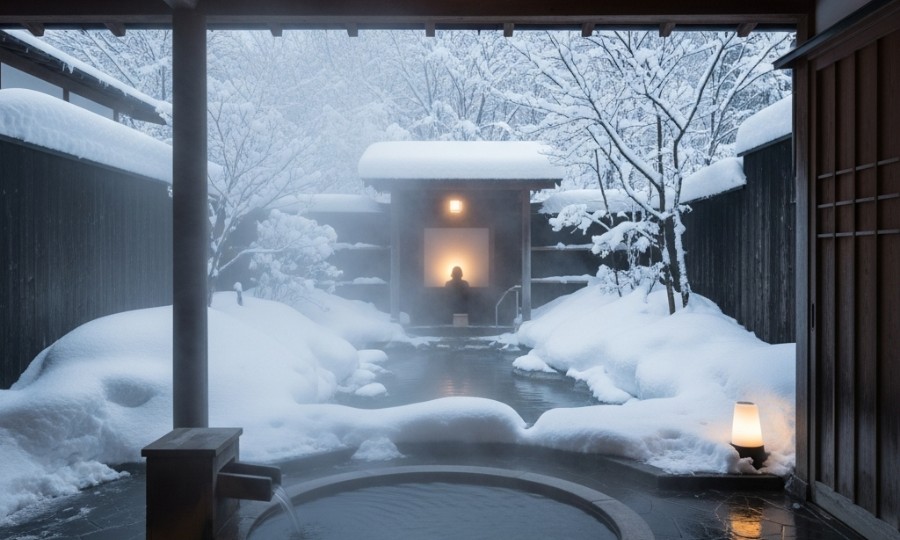
Ever dreamt of escaping the ordinary, trading the chill of winter for something truly magical and deeply relaxing? You’re not alone. Many of us long for a winter retreat that offers more than just cozy blankets and hot cocoa. What if you could immerse yourself in steaming mineral-rich waters while gentle snowflakes danced around you, painting a breathtaking natural canvas? Welcome to the enchanting world of Japan’s winter onsen, where ‘snow-view bathing’ (rotenburo) isn’t just a fantasy; it’s an unforgettable reality.
Here’s the thing: while Japan’s hot springs are glorious year-round, experiencing them in winter is a whole different ballgame. It’s an immersive blend of serene beauty, profound relaxation, and a cultural embrace that truly nourishes the soul. We’re talking about stepping into a traditional outdoor bath, surrounded by pristine white snow, with the crisp winter air invigorating your senses while the therapeutic warmth of the water melts away every stress. It’s a sensation you’ve simply got to try, and I believe it’s one of the most uniquely Japanese experiences you can have.
Why Winter Onsen is a Must-Try Experience
You might wonder, why brave the cold for an outdoor bath? The truth is, that contrast is precisely what makes winter onsen so incredibly special. Imagine the steam rising dramatically into the frigid air, creating an almost mystical atmosphere. The silence, broken only by the soft crunch of snow or the distant call of a bird, contributes to an unparalleled sense of tranquility. It’s an exquisite sensory paradox that heightens every moment.
Beyond the sheer beauty, there’s a practical side, too. Many believe the mineral properties of onsen water are even more beneficial when enjoyed in cold weather, stimulating circulation and warming you to the core. Plus, let’s be honest, there’s an undeniable charm to seeing the world blanketed in snow from the comfort of a warm, natural spring. It feels a bit like stepping into a postcard, doesn’t it?
Noboribetsu Onsen: Hokkaido‘s Volcanic Wonderland
First, let’s look at Noboribetsu, nestled in Hokkaido, Japan’s northernmost island. This isn’t just any onsen town; it’s often called ‘Hell Valley’ (Jigokudani) due to its dramatic, sulfurous fumaroles and bubbling hot springs. It’s a truly otherworldly landscape that perfectly complements the onsen experience. Here, you’ll find an incredible variety of hot spring waters, each boasting different mineral compositions and purported health benefits. From sulfur springs that leave your skin feeling incredibly soft to iron springs believed to help with anemia, Noboribetsu offers a unique ‘onsen buffet.’
Picture this: you’ve spent the day exploring the snow-covered volcanic landscape, perhaps even spotting some local wildlife. As dusk settles, you slip into a rotenburo, the steam rising around you, and look up at a sky full of stars or watch snowflakes drift down onto the surrounding rocks. It’s an unforgettable moment of peace and connection with nature, making it a top choice for a winter onsen retreat.
Ginzan Onsen: A Taisho-Era Fairytale
If you’re after something truly cinematic, Ginzan Onsen in Yamagata Prefecture should be at the top of your list. This incredibly picturesque town looks like it’s been plucked straight from a Studio Ghibli film, especially when covered in a thick layer of snow. Lined with charming wooden ryokan (traditional inns) that date back to the Taisho era (1912-1926), Ginzan is famous for its gas lamps that cast a warm, nostalgic glow over the snow-covered Ginzan River in the evenings. It’s an incredibly romantic and nostalgic setting, perfect for those seeking a more traditional and visually stunning experience.
Staying at one of the historic ryokan here is an experience in itself. You’ll enjoy exquisite multi-course kaiseki dinners, sleep on futons, and, of course, have access to incredible onsen. Imagine a rotenburo here, with the soft light of gas lamps reflecting off the snow, creating a truly magical atmosphere. It’s a place where time seems to slow down, allowing you to fully savor the moment, perhaps with a warm cup of sake after your bath. You might be thinking this sounds too good to be true, but trust me, Ginzan in winter is as enchanting as it sounds.
Kusatsu Onsen: Japan’s Premier Hot Spring
Moving southwest, we come to Kusatsu Onsen in Gunma Prefecture, consistently ranked as one of Japan’s top three hot springs. Kusatsu is renowned for the sheer volume and quality of its naturally flowing, highly acidic waters, believed to cure a multitude of ailments. The town’s iconic ‘Yubatake’ (hot water field) is its central feature, where piping hot spring water flows through wooden channels, cooling it to a suitable bathing temperature while showcasing its impressive volume.
While Kusatsu is vibrant year-round, its winter charm is undeniable. The steam rising from the Yubatake creates a dramatic spectacle against the snowy backdrop, and the town is bustling with visitors enjoying both the onsen and the surrounding ski resorts. After a day on the slopes, there’s nothing quite like soaking in Kusatsu’s potent waters. It’s not just relaxing; it’s genuinely therapeutic, leaving you feeling refreshed and rejuvenated. You’ll find numerous public baths and ryokan here, each offering a slightly different onsen experience, but all sharing the incredible natural bounty of Kusatsu’s springs.
Embracing Onsen Etiquette: A Guide for American Travelers
We know this feels overwhelming sometimes, especially if you’re new to onsen culture. Generally speaking, Japanese onsen etiquette is fairly straightforward once you understand the basics. First and foremost, cleanliness is paramount. You’ll always need to wash thoroughly (shampoo, soap, rinse) before entering the communal bath. Usually, there are designated showering stations for this purpose.
Regarding tattoos, this can be a point of concern for many American travelers. While some traditional onsen still prohibit visible tattoos, many modern establishments, especially those catering to international tourists, are becoming more accommodating. If you have small tattoos, you might be able to cover them with waterproof patches. For larger tattoos, it’s always best to check with the specific ryokan or onsen beforehand. Don’t be afraid to ask! The key is respect for local customs, and most places appreciate the effort to understand and adhere to their rules.
And yes, you’ll be bathing nude in communal areas. This can feel a bit daunting at first, but it’s a completely natural and non-sexualized part of Japanese culture. Everyone is there for the same reason: to relax and enjoy the healing waters. You’ll usually receive a small modesty towel (tenugui) that you can use to cover yourself while walking to and from the bath, but it shouldn’t go into the main bathing water.
Planning Your Perfect Winter Onsen Journey
Ready to plan your escape? Consider visiting between late December and early March for the best chance of significant snowfall. Booking your ryokan well in advance, especially for popular spots like Ginzan, is crucial, as they fill up quickly during peak season. Think about combining your onsen retreat with other winter activities, perhaps a day of skiing or snowboarding, or exploring nearby snow festivals.
In my experience, a multi-day stay allows you to truly unwind and soak in the atmosphere. Don’t rush it! Allow yourself time to relax, enjoy the local cuisine, and simply be present in the serene surroundings. Whether you choose the dramatic landscapes of Noboribetsu, the nostalgic charm of Ginzan, or the therapeutic power of Kusatsu, a winter onsen experience in Japan promises to be a highlight of your travels. It’s a chance to disconnect from the hustle, reconnect with nature, and find a profound sense of peace. Why not make this winter truly unforgettable?
This article was drafted with AI assistance. Please verify all claims and information for accuracy. The content is for informational purposes only and does not constitute professional advice.
Ready to plan your trip?
AIrConxt builds daily trip plans in 2 minutes.
Calculator values are estimates. Always confirm with your airline, hotel, or credit-card provider.
