
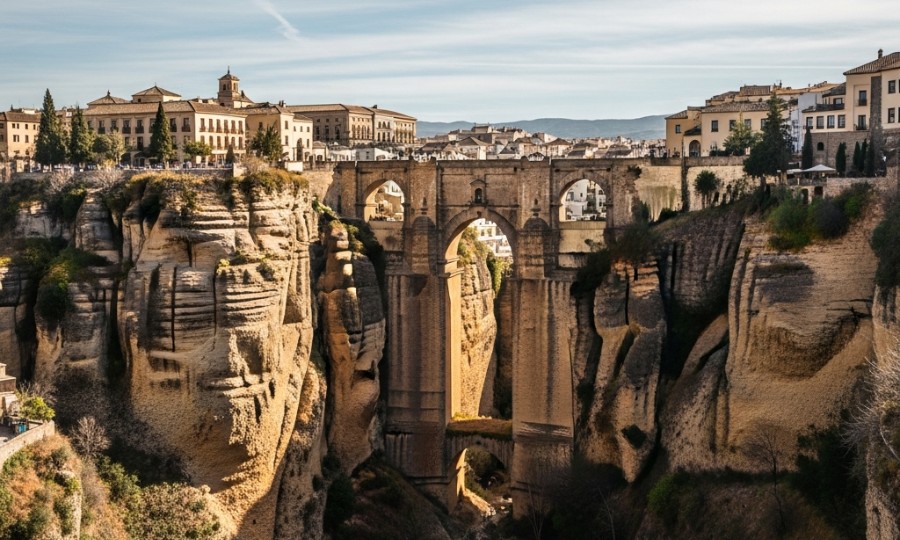
Ever found yourself staring at a map of Southern Spain, eyes darting between the dramatic cliffs of Ronda and the majestic palaces of the Alhambra, wondering how on earth you’ll fit both into one seamless trip? You’re certainly not alone. Andalusia, with its rich tapestry of history, culture, and breathtaking landscapes, offers an embarrassment of riches, and trying to connect its iconic highlights can feel like a daunting puzzle. But don’t worry, we’re here to help you unlock the magic of this incredible region without the travel headaches.
Unlocking Andalusia’s Magic: Why Ronda and Alhambra Deserve Your Time
Let’s be real: Ronda and the Alhambra are non-negotiable stops for any first-time visitor to Andalusia. Ronda, perched dramatically atop El Tajo gorge, is a testament to natural beauty and a storied past, famous for its iconic Puente Nuevo bridge and its historic bullring. It’s a place that just feels different, a town where time seems to slow down, inviting you to simply soak it all in. (And trust me, the views are even better in person!) On the other side of the region lies Granada, home to the Alhambra – a sprawling fortress and palace complex that stands as a zenith of Moorish art and architecture in Spain. Walking through its Nasrid Palaces and the Generalife gardens, you can’t help but feel transported to another era. It’s truly an experience that leaves you awestruck.
But here’s the thing: geographically, they’re not exactly neighbors. Ronda is nestled in the mountainous western part of Andalusia, while Granada and the Alhambra are further east. So, how do you seamlessly weave these two magnificent experiences into one unforgettable journey without spending half your vacation in transit? That’s precisely what we’re going to explore.
The Logistical Lowdown: Getting Your Bearings in Southern Spain
Understanding the lay of the land is your first step. Andalusia is Spain’s largest autonomous community, and its major cities – Seville, Malaga, Granada, Cordoba – are all connected, but getting to Ronda often requires a bit more planning due to its more isolated, mountainous location. Seville and Malaga serve as excellent hubs for exploring the region. Malaga, with its international airport, is often your gateway into Southern Spain, while Seville, the capital, offers fantastic train connections and a vibrant cultural scene. Generally speaking, you’ll find that connecting these larger cities by train is efficient, but reaching places like Ronda often involves buses or a rental car.
Crafting Your Ideal Route: Strategic Approaches for Ronda & Alhambra
When it comes to integrating Ronda and the Alhambra, you essentially have two main strategic approaches. Both have their merits, and the ‘best’ one really depends on your travel style and how much time you’ve got.
Option 1: The “Base Camp” Strategy
This approach involves choosing a central city – typically Seville or Malaga – as your base for a significant portion of your trip, then taking day trips or shorter excursions from there. For instance, you could spend 3-4 days in Seville, using one day for a round-trip to Ronda. This works well if you prefer unpacking once and settling in. From Seville, you can catch a bus (usually about 2 hours) or, if you’re feeling adventurous, drive to Ronda. After your time in Seville, you’d then move on to Granada for 2-3 days to thoroughly explore the Alhambra and the city itself. The biggest pro here is less packing and unpacking; the con is potentially longer travel days for excursions.
Let’s consider an example: You fly into Malaga, spend a couple of days exploring the city and its beaches. Then, you head to Seville for a four-day stay. From Seville, you take a day trip to Ronda, perhaps hiring a car for the flexibility to stop in some of the charming pueblos blancos (white villages) along the way. After Seville, you’d take a comfortable high-speed train to Granada, where you’d dedicate two full days to the Alhambra and its surrounding neighborhoods like the Albaicín. Doesn’t that sound a lot less stressful than constant back-and-forth?
Option 2: The “Progressive Journey” (Multi-City Flow)
If you prefer a more dynamic journey with less backtracking, a progressive itinerary might be for you. This involves moving from city to city, optimizing your route to hit each destination sequentially. A common and highly recommended flow would be something like: Arrive Malaga > Ronda > Granada > Seville > Depart. This minimizes travel time between destinations and allows you to experience each place more deeply, perhaps even enjoying an overnight stay in Ronda (which, in my experience, truly shines in the evening after the day-trippers have left).
An example of this might look like: Fly into Malaga, rent a car, and drive directly to Ronda for a one-night stay, exploring its dramatic gorge and historic bullring. The next morning, you’d drive to Granada, drop off the car, and spend 2-3 nights immersed in the Alhambra and the city’s vibrant tapas scene. Finally, you’d take a direct train from Granada to Seville for the last leg of your trip. This type of optimized Andalusian route is often favored by those who want to see more of the countryside and embrace the journey itself.
Beyond the Basics: Making the Most of Each Destination
Simply getting there isn’t enough; you’ll want to maximize your time in both Ronda and Granada.
Ronda: Embrace the Heights
Beyond the Puente Nuevo, make sure to explore the Plaza de Toros, one of Spain’s oldest and most beautiful bullrings. Wander through the old town (La Ciudad), visit the Casa del Rey Moro, and descend the Minaret stairs for unique perspectives of the gorge. Consider a guided walking tour to truly appreciate the history and legends. And if you have a car, don’t miss the chance to visit some of the nearby white villages like Setenil de las Bodegas, which is literally built into the rocks!
Alhambra (Granada): Plan Ahead, Seriously!
This is critical: you absolutely must book your Alhambra tickets weeks, if not months, in advance, especially if you want to secure a slot for the Nasrid Palaces (the crown jewel of the complex). We know this feels overwhelming, but securing those Alhambra tickets is non-negotiable for a smooth visit. Allow at least 3-4 hours to explore the entire site. Afterward, get lost (in a good way!) in the winding streets of the Albaicín, Granada’s old Moorish quarter, offering incredible views of the Alhambra, especially at sunset from Mirador de San Nicolás. Enjoy some traditional tapas – in Granada, many bars still offer a free tapa with your drink!
Practicalities & Pointers: Smooth Sailing in Andalusia
Navigating Andalusia effectively involves a few key considerations.
- Transportation: Rental cars offer immense flexibility, especially for exploring the smaller towns and scenic routes that buses and trains don’t reach directly. However, be prepared for narrow streets in old towns and parking challenges. For inter-city travel, Spain’s Renfe train network is excellent and efficient between major hubs like Seville, Cordoba, and Malaga. Buses (primarily ALSA) are a fantastic, budget-friendly option, with extensive routes connecting almost every town, including Ronda.
- Accommodation: Staying central in each city will save you valuable time. Look for hotels with good public transport access or within walking distance of major sights. Consider boutique hotels for a more authentic experience, or even a ‘parador’ (luxury hotel in a historic building) for a splurge.
- Timing: Spring (April-May) and Fall (September-October) are generally the best times to visit Andalusia. The weather is pleasant, and the crowds are manageable. Summers are incredibly hot (and we mean hot), particularly inland, which can make sightseeing uncomfortable. Winters are mild but can be chilly and rainy.
You might be thinking this won’t work because of budget constraints or limited time, but with a clear plan, even shorter trips can be incredibly rewarding. But what about the unexpected delays or changes? Always build a little flexibility into your itinerary; a buffer day can be a lifesaver. Ensure you have travel insurance, and keep digital copies of all your important documents.
Crafting your perfect Andalusian itinerary, integrating the breathtaking beauty of Ronda with the historical grandeur of the Alhambra, is entirely achievable with a bit of strategic planning. It’s about finding the balance that works for you, whether that’s settling into a base camp or embracing a progressive journey across the region. You’re ready to soak in the sun, history, and incredible flavors of Southern Spain, aren’t you? Start by securing those flight and Alhambra tickets, and the rest will fall into place. Happy travels!
Ready to plan your trip?
AIrConxt builds daily trip plans in 2 minutes.
Calculator values are estimates. Always confirm with your airline, hotel, or credit-card provider.
