
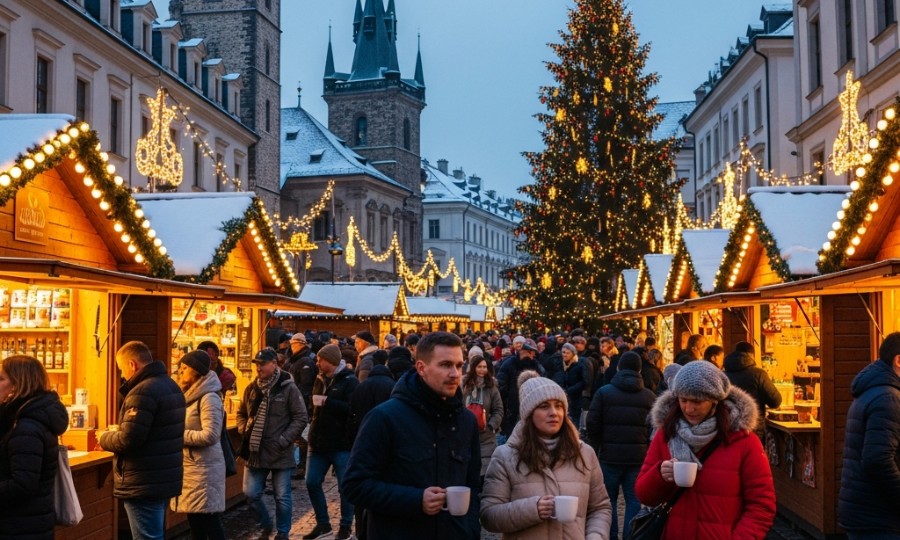
Have you ever dreamt of a truly magical holiday season, one filled with the scent of gingerbread and spiced wine, twinkling lights illuminating ancient architecture, and the joyful murmur of carolers? For many Americans, the quintessential European Christmas Market experience is exactly that dream. It’s not just about shopping; it’s an immersion into centuries-old traditions, a feast for the senses, and a heartwarming escape from the everyday.
We know this feels like a big trip, a grand adventure across the ocean, and you might be thinking it’s too complicated to plan. But trust us, with a little guidance, your inaugural journey to Europe’s most beloved festive markets can be surprisingly smooth and incredibly rewarding. From the historic squares of Germany to the charming alleys of the Czech Republic, these markets offer an authentic holiday spirit you won’t find anywhere else. Let’s dive into how you can make this enchanting dream a reality.
Why a European Christmas Market is Your Next Holiday Tradition
Here’s the thing: European Christmas markets aren’t just a trend; they’re a deeply rooted cultural phenomenon, some dating back to the Middle Ages. They offer a stark contrast to the often commercialized holiday shopping experience we’re used to back home. Aren’t you tired of the same old mall carols and crowded big-box stores? Imagine instead wandering through a historic square, perhaps in Nuremberg or Prague, surrounded by wooden chalets selling handcrafted treasures, the air alive with festive music and the aroma of roasted chestnuts.
This isn’t merely about buying gifts; it’s about creating memories. It’s about sipping Glühwein (warm spiced wine) from a souvenir mug, watching a local artisan carve intricate wooden ornaments, or perhaps even catching a puppet show. These markets are community hubs, places where families gather, friends share laughter, and visitors feel a genuine connection to local culture. They embody a slower, more intentional approach to the holidays, one that emphasizes joy, craftsmanship, and shared experience. It’s a genuine slice of European life, wrapped in twinkling lights and festive cheer.
Navigating the Charm: Essential Tips for American First-Timers
Embarking on your first European Christmas market adventure might seem daunting, but it doesn’t have to be. Generally speaking, a little preparation goes a long way, especially when you’re navigating new cultures and currencies. First off, currency: while some vendors, especially at larger markets, might accept credit cards, cash is king. You’ll want to have Euros (for Germany) or Czech Koruna (for Prague) on hand for smaller purchases, food stalls, and those charming one-off souvenirs. Don’t worry, ATMs are widely available, but it’s always good to have some local cash when you arrive.
Next, let’s talk about staying warm. These markets are often outdoors in chilly December weather, so layers are your best friend. Think thermal underwear, warm socks, waterproof boots (trust me, those cobblestones are no joke, especially after a light snowfall), a good hat, gloves, and a scarf. You’ll thank yourself when you’re comfortably enjoying a festive evening rather than shivering. Finally, while English is widely spoken in tourist areas, learning a few basic phrases in German or Czech (like ‘Hallo,’ ‘Danke,’ ‘Bitte,’ and ‘Wieviel kostet das?’ or ‘Kolik to stojí?’) can truly enhance your experience and show respect for the local culture. People really appreciate the effort!
The Culinary Delights You Can’t Miss
One of the absolute highlights of any European Christmas market is the food and drink. It’s an integral part of the experience, a journey for your taste buds. What’s better than a steaming mug of spiced wine on a chilly evening? In Germany, that’s Glühwein, often served with a shot of rum or brandy (known as ‘mit Schuss’). In Prague, you’ll find Svařené víno, a similar warming treat. Pair that with a hearty Bratwurst, grilled to perfection and served in a crusty roll, or a giant soft pretzel (Brezel). You might be thinking this is just street food, but it’s often high-quality, regionally sourced, and utterly delicious.
For those with a sweet tooth, don’t miss the gingerbread (Lebkuchen in Germany, often intricately decorated), roasted almonds, or the Czech Trdelník – a delicious, sugar-coated pastry cooked over an open flame. It’s cylindrical, hollow, and often filled with ice cream or chocolate spread, though the traditional plain version is truly wonderful. Each market will have its own regional specialties, so be adventurous! I believe half the fun is discovering new flavors.
Souvenir Savvy: What to Bring Home
Beyond the edible treats, European Christmas markets are treasure troves for unique, handcrafted souvenirs. You might be thinking these are just tourist traps, but many stalls feature genuine artisans selling items passed down through generations. Look for hand-carved wooden ornaments, often depicting traditional scenes or whimsical figures, which make fantastic additions to your own Christmas tree. Blown glass ornaments, particularly from regions known for their glassmaking, are also exquisite.
In Nuremberg, you’ll find the iconic ‘Rauschgoldengel’ (gold foil angels) and prune men (‘Zwetschgenmännle’). Dresden is famous for its ‘Pflaumentoffel’ (chimney sweep figures made from dried plums). For something truly authentic, consider a traditional German ‘Räuchermann’ (incense smoker) or a ‘Nutcracker.’ These aren’t just trinkets; they’re pieces of art with stories, and they’ll serve as wonderful reminders of your magical trip for years to come. Remember, these items often have a personal touch that mass-produced gifts simply can’t replicate.
Iconic Markets: Where to Begin Your Enchanted Journey
With so many incredible markets across Europe, choosing where to go can feel overwhelming. First, let’s explore Germany’s classic markets, then we’ll venture to the heart of Bohemia. Nuremberg’s Christkindlesmarkt, for instance, is arguably Germany’s most famous and certainly one of its oldest, dating back to the mid-16th century. It’s renowned for its traditional wooden stalls, the iconic Nuremberg Rostbratwurst (small, finger-sized sausages), and the aforementioned Lebkuchen. The atmosphere here is truly special, a living postcard of festive cheer. You’ll feel like you’ve stepped back in time.
Just a short train ride away, Dresden’s Striezelmarkt holds the title of Germany’s oldest Christmas market, established in 1434. It’s famous for its giant Christmas pyramid and the Dresden Christstollen, a delicious fruit bread that has its own protected geographical indication. The sheer scale and historical depth of this market are breathtaking. Then, for a slightly different flavor, Prague’s Christmas markets in Old Town Square and Wenceslas Square are simply enchanting. Picture Gothic architecture, the Astronomical Clock, and a giant Christmas tree all lit up against a backdrop of historic buildings. The Czech capital offers a fairy-tale setting, complete with traditional crafts, live music, and plenty of Trdelník to go around. It’s a truly captivating experience, distinct yet equally magical.
Planning Your Magical Trip: Logistics Made Easy
The best time to visit European Christmas markets is typically from late November through the third week of December. Most markets open the Friday before Advent and close just before Christmas Eve. If you prefer smaller crowds, consider visiting during the week or in the first two weeks of December. Accommodation, especially in popular cities, books up quickly, so you’ll want to secure your flights and hotels well in advance – think 6-9 months out for the best selection and prices. We know this feels overwhelming, but with a little planning, it’s incredibly rewarding.
Consider flying into a major hub like Frankfurt or Munich and then utilizing Europe’s excellent train network to travel between cities. It’s a scenic and often stress-free way to get around, allowing you to sample multiple markets on one trip. A multi-city itinerary, perhaps Nuremberg to Dresden, or even Prague as a standalone destination, can be quite manageable for a first-timer. Don’t forget travel insurance; it’s always a good idea for international trips, providing peace of mind. Imagine sipping Glühwein with a medieval castle backdrop – doesn’t that sound incredible?
So, are you ready to trade the familiar holiday rush for an unforgettable journey into European tradition? Planning your first European Christmas Market adventure is more accessible than you might think. Start by picking one or two key markets that capture your imagination, research flights, and begin to envision yourself amidst the twinkling lights and festive aromas. This isn’t just a vacation; it’s an experience that will fill your holiday season with warmth, wonder, and memories that will last a lifetime. Happy planning!
Ready to plan your trip?
AIrConxt builds daily trip plans in 2 minutes.
Calculator values are estimates. Always confirm with your airline, hotel, or credit-card provider.
