
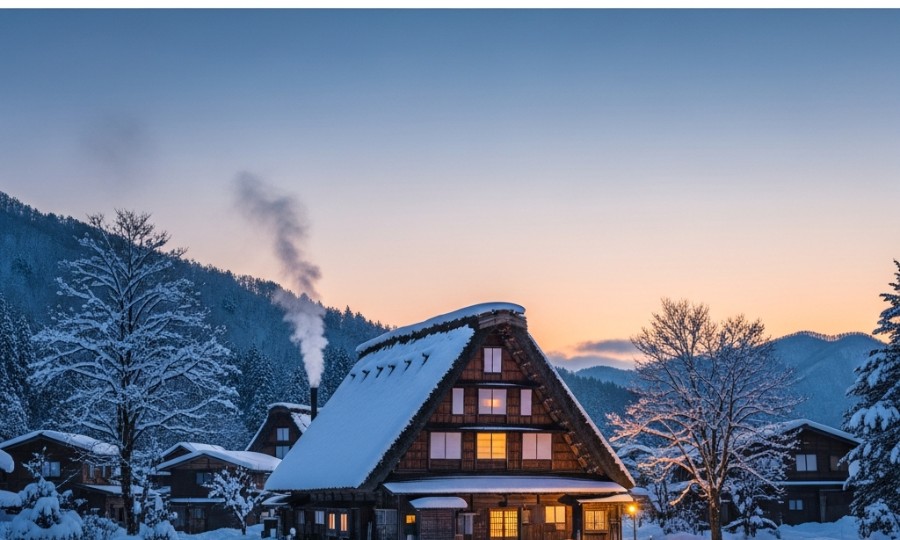
Ever dreamt of stepping into a living postcard, where time seems to slow down and every snowflake adds to an almost magical tranquility? Japan’s traditional snow-covered villages aren’t just scenic; they’re vibrant capsules of history, culture, and a way of life that has gracefully withstood the centuries. We’re not just talking about pretty pictures here; these are places where you can truly immerse yourself in a unique cultural experience, particularly when winter blankets them in a pristine white.
It’s easy to get caught up in the hustle of Tokyo or the historical grandeur of Kyoto, but for a truly soul-stirring journey, you’ll want to venture off the beaten path a bit. Imagine ancient farmhouses with impossibly steep thatched roofs, designed to shed heavy snow and resemble hands clasped in prayer (a visual you won’t soon forget, I promise). This isn’t just a fantasy; it’s the reality awaiting you in places like Shirakawa-go, Ouchi-juku, and Takayama. Ready to discover what makes these destinations so incredibly special?
Shirakawa-go: A UNESCO Wonderland Frozen in Time
When you picture a quintessential Japanese snow village, chances are you’re envisioning Shirakawa-go. This UNESCO World Heritage site, nestled in the remote Shogawa river valley, is famous for its unique gassho-zukuri farmhouses. These aren’t just any old buildings; their distinctive steeply-pitched thatched roofs, which can be up to 60 degrees, are engineered to withstand the region’s incredibly heavy snowfall. It’s truly a marvel of traditional Japanese architecture and ingenious design, isn’t it?
Originally built for large families and silkworm cultivation, many of these homes are still privately owned, but several are open to the public as museums, guesthouses, or restaurants. Visiting the Wada House, for instance, gives you a fascinating glimpse into the daily life of a prominent family from generations past. You’ll see tools, household items, and understand how people adapted to this challenging environment. During winter, especially for the few evenings when the village hosts its famous winter illumination events, Shirakawa-go transforms into an ethereal landscape, glowing softly against the dark, snowy backdrop. We know planning to visit during these specific dates can feel a bit overwhelming, as tickets are often allocated by lottery and sell out quickly, but the effort is genuinely rewarding.
Beyond the iconic farmhouses, the surrounding natural beauty is breathtaking. You can hike to the Ogimachi observation deck for panoramic views of the entire village, a sight that truly puts the scale of these architectural wonders into perspective. It’s a professional yet deeply personal experience to stand there, watching the snow fall on such a historic tableau. You might be thinking, “How do I even get there?” Generally speaking, buses from Takayama or Kanazawa are your best bet, making it a manageable, albeit remote, day trip or overnight stay.
Ouchi-juku: An Edo-Era Post Town Steeped in Charm
Shift your gaze from the mountainous depths of Shirakawa-go to the charming Fukushima Prefecture, and you’ll find Ouchi-juku. This isn’t just another old village; it’s a meticulously preserved Edo-era post town that once served as a vital stop along the Aizu Nishi Kaido trade route. Walking its main street feels like stepping directly into a samurai movie (minus the actual samurai, usually!). The unpaved main street is lined with traditional thatched-roof buildings, many of which now house small shops, restaurants, and inns.
Here’s the thing about Ouchi-juku: it’s not as globally famous as Shirakawa-go, which, in my experience, often means a slightly less crowded, more intimate experience. One of the highlights here is trying the local specialty, negi soba. Instead of chopsticks, you’re given a large leek (negi) to use as an edible utensil. It’s a quirky tradition that adds a wonderful layer of fun to your meal, and yes, you can eat the leek afterwards! Don’t worry, they’ll give you chopsticks if you really struggle, but where’s the adventure in that, right?
The sense of history is palpable as you stroll past the various shops selling local crafts and souvenirs. You can visit the Honjin, the former inn for high-ranking officials, which now serves as a museum, offering more insights into the town’s past. The crisp winter air, the quiet crunch of snow underfoot, and the warm glow from the hearths within the traditional buildings create an atmosphere that’s both inviting and deeply nostalgic. It’s a reminder of a simpler time, preserved with remarkable care.
Takayama: “Little Kyoto” in the Hida Mountains
While not a ‘village’ in the same isolated sense as Shirakawa-go or Ouchi-juku, Takayama, located in the heart of the Japanese Alps, offers a captivating blend of traditional charm and accessibility. Often called “Little Kyoto,” its beautifully preserved old town (Sanmachi Suji) is a delight to explore. Imagine narrow streets lined with Edo-period merchant houses, sake breweries, and craft shops, all framed by the stunning backdrop of snow-capped mountains. It’s a vibrant hub that manages to maintain its historical integrity.
You’ll love wandering through the morning markets along the Miyagawa River, where local farmers and artisans sell fresh produce, pickles, and handmade goods. It’s a wonderful opportunity to interact with locals and sample some regional delicacies. For a taste of Takayama’s unique culture, be sure to visit one of its many sake breweries for a tasting; the crisp mountain water here is renowned for producing exceptional sake. You might even find yourself buying a bottle or two to enjoy back home (and trust me, it’s worth it!).
Takayama is also famous for its elaborate festivals, particularly the Spring (Sanno Matsuri) and Autumn (Hachiman Matsuri) festivals, which feature incredibly ornate floats. While these aren’t winter events, the town’s museums often display elements of these festivals, giving you a sense of their grandeur. The city makes for an excellent base for exploring the wider Hida region, including Shirakawa-go, making it a professional’s choice for a balanced itinerary. Its blend of historical preservation, local cuisine, and easy access to other traditional sites makes it an indispensable stop on your journey through Japan’s snowy heartland.
Planning Your Journey to Japan’s Winter Gems
So, how do you make this dream a reality? First, consider the time of year. While these villages are charming year-round, their true magic really shines under a blanket of snow, typically from late December through early March. However, remember that heavy snowfall can sometimes impact transportation, so it’s wise to build in a little flexibility to your travel plans. Don’t worry, the local infrastructure is quite robust, but nature has its own schedule!
Accommodation can range from modern hotels in Takayama to traditional ryokan (Japanese inns) with hot springs, and even staying in a gassho-zukuri farmhouse in Shirakawa-go (though these book up well in advance!). We’d highly recommend experiencing a ryokan for the full traditional immersion, complete with futon beds and delicious multi-course dinners. When you’re packing, think layers! Warm waterproof clothing, sturdy boots, and maybe even some hand warmers will be your best friends.
Beyond the practicalities, remember to embrace the local customs and etiquette. These are living communities, not just tourist attractions. A respectful approach, a willingness to try new things (like that leek with your soba!), and an open heart will undoubtedly lead to an unforgettable experience. Isn’t it amazing how stepping back in time can feel so incredibly refreshing?
Exploring Japan’s snow-covered traditional villages offers a unique blend of history, natural beauty, and cultural immersion. It’s an adventure that promises not just stunning photographs but also profound memories and a deeper appreciation for Japan’s enduring heritage. Start planning your trip today; these timeless treasures are waiting to enchant you.
Ready to plan your trip?
AIrConxt builds daily trip plans in 2 minutes.
Calculator values are estimates. Always confirm with your airline, hotel, or credit-card provider.
